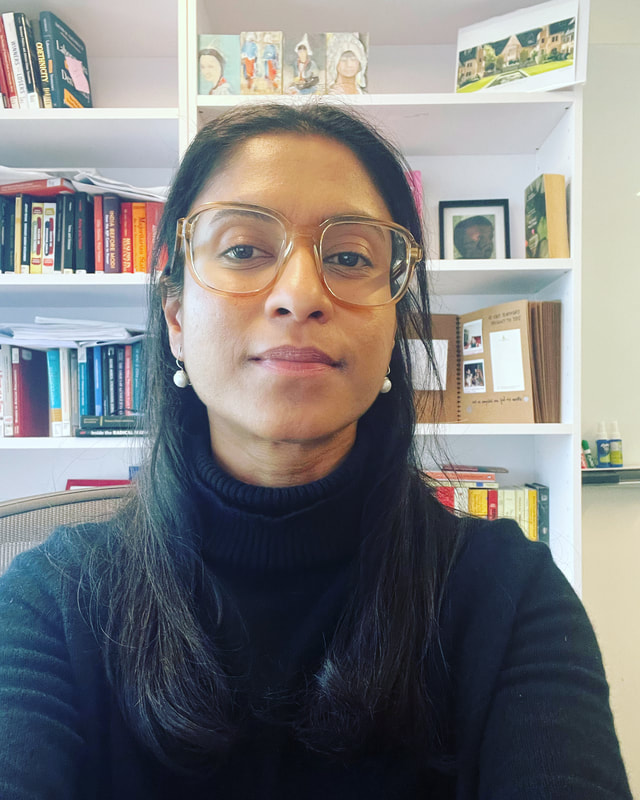
I am an Assistant Professor of Political Science and International Affairs at Department of Politics and the School of Public and International Affairs, Princeton University. As a comparative political scientist, my research is at the intersection of gender and politics, and the political economy of development. India is my primary empirical focus, with extensions to other regions of the Global South.
Methodologically, I combine quantitative and experimental approaches with fieldwork and qualitative research, which inform hypothesis generation, survey design, data collection, and interpretation. My work brings tools of causal inference to primary survey data informed by fieldwork, newly compiled administrative datasets at unprecedented scale, and AI-assisted analysis of textual and visual data.
My research has been published in leading political science journals, including the American Political Science Review, the American Journal of Political Science, and the Journal of Politics. It has also been widely covered in national and international media, and I have contributed opinion editorials to The Indian Express. My scholarship has been recognized with some of the most prestigious awards in political science, including the Mancur Olson Best Dissertation Award in Political Economy (2022) and the Juan Linz Prize for Best Dissertation in the Comparative Study of Democracy & Autocracy (2023). Recently, I recieved the prestigious APSA Urban and Local Politics career award, the Susan Clarke Young Scholar Award (2025). I serve as an Associate Editor at World Politics and I am a member of EGAP, J-PAL, and the UK’s Political Economy Group.
Before joining Princeton, I was a postdoctoral scholar at the Harvard Academy and a non-resident visiting fellow at the Center for the Advanced Study of India at the University of Pennsylvania. I earned my Ph.D. in Political Science from the University of Oxford in 2021 as a member of Nuffield College, and a Research Master’s in Social Sciences from the University of Amsterdam in 2016. Before transitioning to political science, I completed a bachelor’s degree in Computer Science and Engineering.
Book
Representation from Below: The Grassroots Origins of Women’s Political Power in India (Forthcoming, Cambridge University Press, Studies in Comparative Politics Series, Expected print publication: Nov 2026)
[Abstract]
After decades on the sidelines, women are now central to India’s political and development agenda. Representation from Below traces this transformation away from the halls of power, toward women’s inclusion in local politics and the mobilization capacity they build within parties. Drawing on fieldwork, survey data, and natural experiments, the book shows how women in local politics built grassroots chapters of women’s party wings and recruited other women into them, expanding parties’ organizational capacity to mobilize women voters. As women became electorally consequential, party elites adapted, reshaping policies and opening pathways to higher office. Challenging views that clientelist parties or patriarchal norms block women’s agency, the book demonstrates how gender constraints became sources of leverage over parties. The book expands our understanding of why women's descriptive representation matters: not only because it enhances the legitimacy of political institutions or enables women to advocate for their preferences, but also because it serves as a source of organizational capacity that reshapes who parties mobilize and who they ultimately serve.
Publications
-
van Noort S and Goyal T. 2026 Is Ethnic Violence Self-Perpetuating? Quasi-Experimental Evidence from Hindu-Muslim Riots in India Journal of Conflict Resolution 70(6), 1070-1094.
[Abstract]
Existing literature suggests that ethnic violence tends to be self-perpetuating. Testing this hypothesis is challenging as both past and current violence could be determined by the same underlying factors. To overcome this endogeneity problem we exploit the fact that the date of Hindu festivals in India is exogenously determined by the lunar calendar and that when a major Hindu festival falls on a Friday, the holy day for Muslims, the probability of Hindu-Muslim riots rises sharply. In line with the existing literature we find that Hindu-Muslim riots are strongly serially correlated over the 1976 to 2001 period. Importantly, however, this effect disappears and becomes negative (and statistically insignificant) when employing the Hindu festivals instrument. These results suggest that ethnic violence does not cast a long shadow. Once the underlying factors that cause violence are resolved confict-ridden communities are no more likely than other communities to experience future violence.
-
Goyal T. 2025 Local political representation as a pathway to power: A natural experiment in India American Journal of Political Science 69: 516–530.
[Abstract]
What drives the career advancement of female politicians in opaque selection environments where party activists hold sway? I argue that women's higher presence in local politics not only improves party elite responsiveness to greater talent supply (top-down mechanism) but also expands women's capacity to organize grassroots activist networks to influence party-nomination decisions (bottom-up mechanism). Using the natural experiment of gender quotas in Delhi, which cause as-if-random variation in the number of local reserved seats within state constituencies, I estimate a novel effect of gender quotas. In state constituencies with women's higher presence in local politics, local female politicians are more likely to be promoted, and senior female politicians are more likely to get renominated. Qualitative evidence shows how women leverage grassroots networks and forge informal connections across party hierarchies. The findings emphasize the pivotal role of women's strategic political networks and grassroots organizing in shaping their political careers.
[Awards]
King’s Quantitative Political Economy Seminar Award for Best Paper, 2021
Top 10 most cited paper, AJPS 2025
(certificate)
Lawrence Longley Award for Best Published Article, Representation and Electoral Systems APSA Section, 2026
-
Goyal T and Sells C. 2024 Descriptive Representation and Party Building: Evidence from Municipal Governments in Brazil American Political Science Review 118(4):1840-1855.
[Abstract]
This article highlights a new way in which descriptive representation enhances democracy through inclusive party building. We theorize that parties retain and promote incumbents based on gendered criteria, disproportionately incentivizing women to recruit party members. However, gendered resource inequalities lower women’s access to the patronage required for recruitment. Women respond by recruiting more women members, as it lowers recruitment costs, is role-congruent, and eases credit claiming. Using rich administrative data on party membership from 2004 to 2020 and a regression discontinuity design in Brazil, we find that, despite resource disparities, women mayors recruit new members at similar rates as men but reduce the gender gap in party membership. As expected, women are more likely to be promoted in constituencies where they most lower the gender gap in party membership. We also find that women’s increased membership improves party resilience. Our findings suggest that descriptive representation strengthens party building by including underrepresented citizens.
[Awards]
Jack Walker Best Article Award (2025), Political organization and parties section, APSA
-
Goyal T. 2024 Representation from Below: How Women’s Grassroots Party Activism Promotes Equal Political Participation American Political Science Review 118(3), 1415–1430.
[Abstract]
Extensive research investigates the impact of descriptive representation on women’s political participation; yet, the underlying mechanisms remain unclear. This article develops a novel theory of descriptive representation, arguing that women politicians mobilize women’s political participation by recruiting women as grassroots party activists. Evidence from a citizen survey and the natural experiment of gender quotas in India confirm that women politicians are more likely to recruit women party activists, and citizens report greater contact with them in reserved constituencies during elections. Furthermore, with women party activists at the helm, electoral campaigns are more likely to contact women, and activist contact is positively associated with political knowledge and participation. Evidence from representative surveys of politicians and party activists and fieldwork in campaigns, further support the theory. The findings highlight the pivotal role of women’s party activism in shaping women’s political behavior, especially in contexts with pervasive clientelism and persistent gender unequal norms.
[Awards]
APSA Kauffman Foundation Award for Best Paper on Entrepreneurship and Inclusion, 2020
[Media]
-
Goyal T. 2024 Do Citizens Enforce Accountability for Public Goods Provision? Evidence from India's Rural Roads Program Journal of Politics 86:1 97-112.
[Abstract]
This article investigates voter responsiveness to the world’s largest rural roads program, a highly visible development program that improved connectivity for one-third of humanity that previously lacked road access. Investigating 180,000 roads provided across half a million Indian villages aggregated across multiple elections over the last 20 years, the article finds that road provision fails to boost electoral support for the ruling party. Exploiting population-based implementation rules that partly determine road allocation, instrumental variable regressions show that voters remain unresponsive to exogenous road provision. Exploiting subnational variation in implementation and political alignment, analysis shows that factors that breakdown the accountability chain, such as quality, salience, myopia, corruption, or attribution concerns, do not explain these results. The findings suggest that weak accountability presents a more enduring challenge to democracy than assumed in theoretical models and policy interventions.
[Media]
Working Papers
-
The Expression of Religious Identity in India: Evidence from 505 Million Voter Records (co-authored with Feyaad Aalie, Viktor Enssle, Saad Gulzar, and Gufran Pathan.)
[Abstract]
We provide a theoretically grounded descriptive analysis of religious identity expression in India byexamining personal names in over 505 million voter records. Standard theories of identity predict asymmetry: under rising discrimination, minorities should moderate visible markers while majorities express identity freely. In contrast, we find that both Hindus and Muslims show similarly high and increasing levels of religious distinctiveness in names. To characterize this rise, we examine the divine and social components of religious identity. We find no increase in doctrinally rooted names, inconsistent with growing religious devotion as an explanation. Instead, both groups increasingly draw from a smaller set of common names, and identity expression is stronger in segregated areas for the locally dominant group, highlighting the social function of religious identity. Together, these patterns reveal a precarious calculus in which minority moderation no longer holds, and cultural divides intensify alongside, and ahead of, majoritarian electoral politics.
-
Politicians discriminate when women claim their rights: Evidence from experiments with India's rural politicians (with Sam Van Noort and Mats Ahrenshop)
[Abstract]
Are politicians equally responsive to their constituents? We provide strong experimental evidence of gender bias in political responsiveness in rural India. Using vignette experiments embedded in a state-representative survey of local politicians in Bihar, we randomly varied the gender and caste of citizens requesting help with lockdown enforcement, inheritance rights, land encroachment, and sanitation. Politicians, including women and lower-caste leaders, generally assisted across scenarios, but starkly discriminated against women (both upper- and lower-caste) when claims invoked gender-based inheritance rights. We find little evidence of caste or gender bias in other scenarios. Results replicate among elected leaders with judicial authority over inheritance disputes. Quantitative text analysis reveals pervasive rhetorical gender discrimination. Our paper uncovers a consequential barrier to political equality, showing that women face discrimination, including by women leaders, precisely when seeking access to the very entitlements designed to empower them.
Teaching
-
POL 351: The Politics of Development, an undergraduate lecture course. Spring 2025, 2027.
-
POL 357: Gender and Development, an undergraduate lecture course. Spring 2023, 2025, Fall 2026 (revised course outline coming soon).
-
SPI 300: Gender Gaps in Politics, an undergraduate seminar. Spring 2023, 2025, 2027.